
Navratri 2026: Dates, Ghatasthapana Muhurat and How to Choose a Brass Durga Idol
, by Vedansh Craft, 6 min reading time
Navratri 2026 runs October 11 to 19. Get the Ghatasthapana muhurat, the nine forms of Durga explained, and how to choose the right brass Durga idol for your home altar.
Navratri 2026: Dates, Ghatasthapana Muhurat and How to Choose a Brass Durga Idol
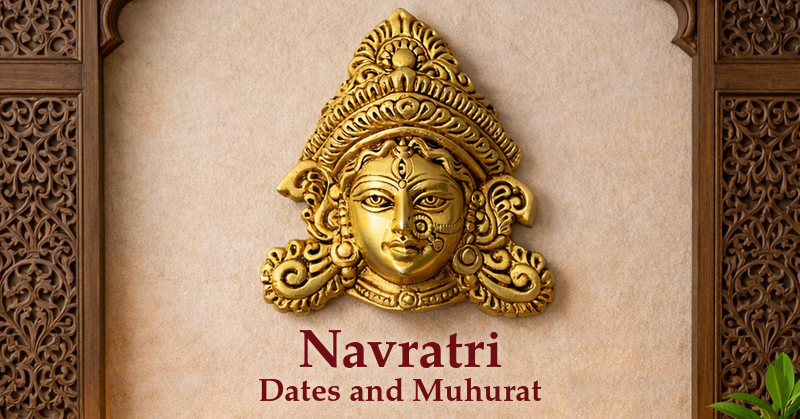
Sharad Navratri 2026 begins on Sunday, October 11 and continues through Monday, October 19, with Maha Navami on the final day and Vijayadashami, or Dussehra, following on Tuesday, October 20. Over these nine nights, nine forms of Goddess Durga are worshipped, one each day, culminating in the victory of good over evil. This guide covers the exact dates and muhurat, a short explainer of the nine forms of Durga, and how to choose a Durga idol that suits your home altar, whether you want one for the festival or one to keep year round.
When is Navratri 2026?
Navratri 2026 runs from Sunday, October 11 to Monday, October 19. The most auspicious window for Ghatasthapana, the ritual installation of the kalash that marks the start of the festival, falls on the morning of October 11, roughly between 6:20 AM and 10:15 AM. Many households also use the Abhijit Muhurat, a shorter and highly auspicious midday window around 11:45 AM to 12:30 PM, if the morning slot is missed. Exact timings shift slightly by city, so it is worth checking a local panchang for your area. The festival closes with Vijayadashami on Tuesday, October 20.
The Nine Forms of Durga: A Day by Day Guide
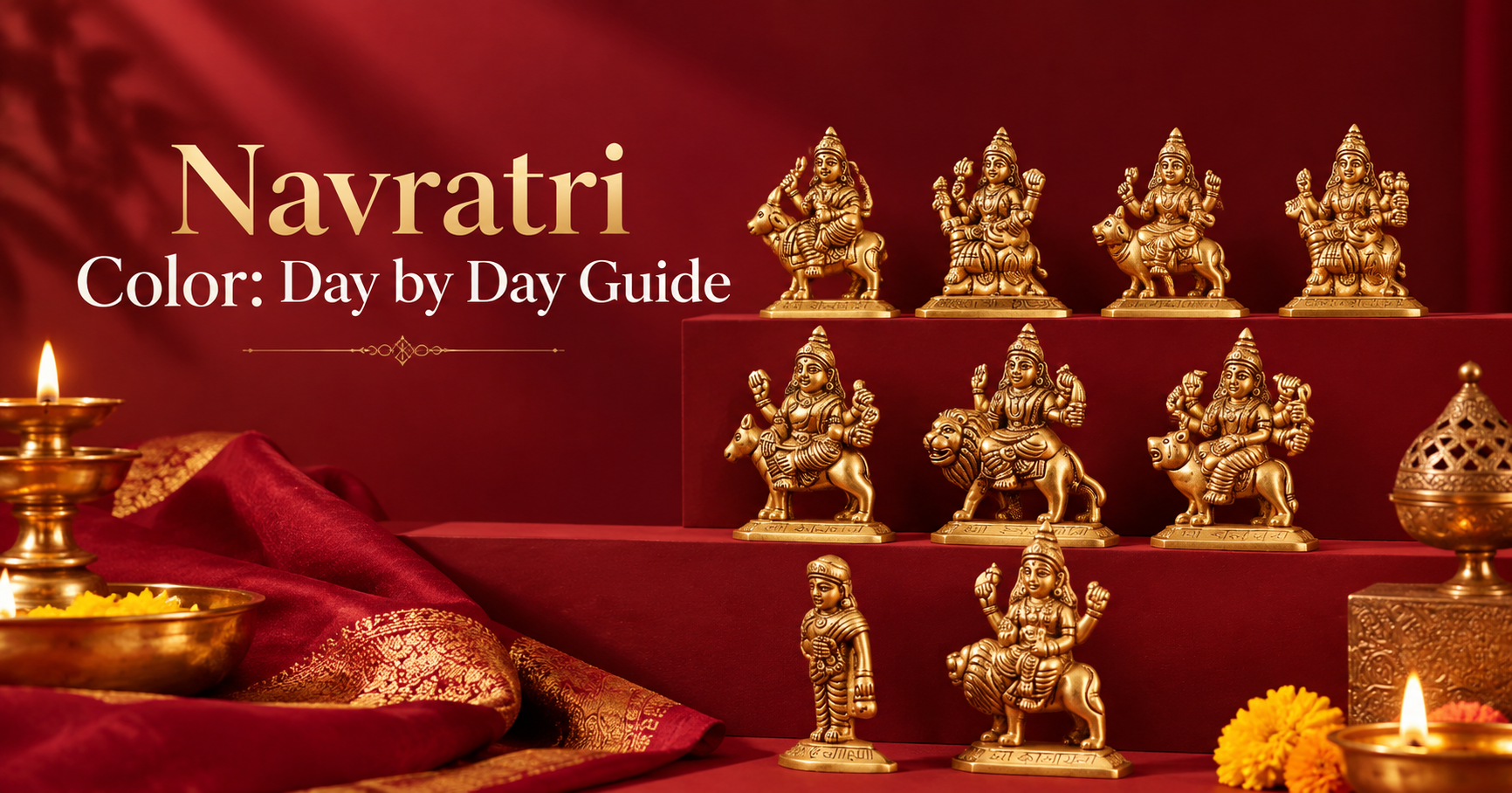
Each of the nine nights of Navratri honours a different form of the goddess, together known as the Navadurga. While the exact sequence can vary slightly by region and panchang, the widely followed order is:
- Shailputri, the daughter of the mountains, worshipped on Day 1
- Brahmacharini, the form of penance and devotion, Day 2
- Chandraghanta, the warrior form associated with courage, Day 3
- Kushmanda, believed to have created the universe with her smile, Day 4
- Skandamata, the motherly form, mother of Skanda, Day 5
- Katyayani, the fierce warrior form, Day 6
- Kalaratri, the fearsome destroyer of darkness, Day 7
- Mahagauri, the form of purity and grace, worshipped on Durga Ashtami, Day 8
- Siddhidatri, the giver of spiritual powers, worshipped on Maha Navami, Day 9
In Eastern India, the last few days of Navratri are celebrated as Durga Puja, with elaborate pandals and processions, while in Gujarat and much of Western India the nights are marked by garba and dandiya raas.
Clay Idol or Brass Idol: Choosing a Durga Murti for Your Home
Just as with Ganesh Chaturthi, the choice between a clay and a brass Durga idol comes down to what you want from it.
Clay idols are traditional where visarjan, or immersion, is part of the local Durga Puja custom, particularly in Bengal and Eastern India, where the idol is immersed at the end of the festival.
Brass idols are not immersed. They are installed the same way, worshipped through the nine nights with daily aarti, and then kept permanently on the home altar, becoming part of your daily puja long after Navratri ends. This is the more common choice for households in Western, Northern, and Southern India that observe Navratri primarily through fasting, puja, and garba rather than a public immersion procession. A brass idol also means the investment compounds each year, since it only develops a richer finish with regular care.
When choosing a brass Durga idol, look at:
- The form depicted. Durga seated or standing on a lion is the most traditional depiction, symbolising her as Simhavahini, the one who rides the lion into battle against evil.
- Size for your altar. A 3.5 to 5.5 inch idol works well for most home mandirs, while larger pieces suit a dedicated puja room.
- Detailing. Look for clear detailing in the crown, weapons, and the lion's mane, which is where hand finishing shows most clearly.
- Weight and solidity. Solid brass idols feel noticeably heavier for their size compared to lightweight plated alternatives, and hold up better over years of cleaning and use.
Durga Idols to Consider for Navratri 2026
- Brass Durga Idol Sitting on Lion (5.5 Inch), our best selling Durga murti, with fine detailing suited to a dedicated puja room.
- Brass Durga Devi Sitting on Lion Idol (3.5 Inch), a compact option for a smaller home altar or a first Durga idol.
- Brass Standing Kali Maa Idol, for households that also worship Kali, one of Durga's fiercest forms, alongside the main idol.
- Brass Superfine Standing Mahalasa Narayani Idol (5.3 Inch), a finely detailed alternative for a distinctive home altar.
Frequently Asked Questions
When is Navratri 2026?
Sharad Navratri 2026 runs from Sunday, October 11 to Monday, October 19, 2026, with Vijayadashami or Dussehra on Tuesday, October 20.
What is the Ghatasthapana muhurat for Navratri 2026?
The main morning muhurat on October 11, 2026 falls roughly between 6:20 AM and 10:15 AM, with an additional Abhijit Muhurat window around 11:45 AM to 12:30 PM for those who miss the morning slot. Timings can vary slightly by city.
How many forms of Durga are worshipped during Navratri?
Nine forms, known as the Navadurga, are worshipped over the nine nights: Shailputri, Brahmacharini, Chandraghanta, Kushmanda, Skandamata, Katyayani, Kalaratri, Mahagauri, and Siddhidatri, one form per day.
Should I choose a clay or a brass Durga idol?
Clay idols are traditional where the idol is immersed at the end of the festival, common in Bengal's Durga Puja. Brass idols are not immersed. They are worshipped through Navratri and then kept permanently on the home altar for daily puja in the years that follow.
What is the difference between Navratri and Durga Puja?
Navratri refers to the nine nights of worship observed across India, often marked by fasting, puja, and garba in Western and Northern India. Durga Puja is the specific form of the celebration observed in Eastern India, centred on the last few days of Navratri with elaborate pandals, processions, and immersion of the idol.
Tags
Blog posts